A data-driven analysis for retail investors navigating current market conditions
With the S&P 500 trading near all-time highs and the VIX hovering in the mid-teens, many investors are asking a crucial question: how likely is a significant market correction in the coming weeks?
Let’s break down the probabilities using multiple analytical frameworks to give you a clearer picture of what the data suggests.
Where We Stand Today
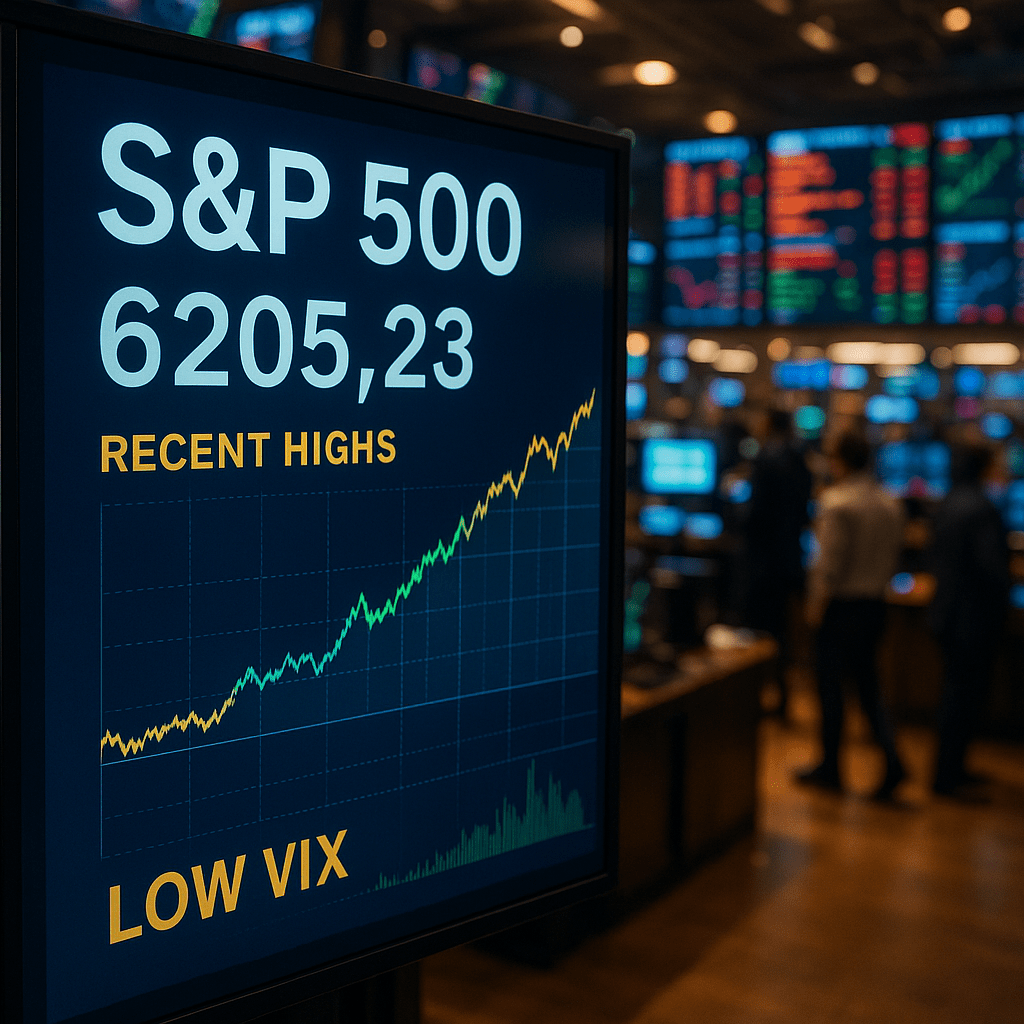
The market is in an interesting position. The S&P 500 recently hit new highs around 6,299, with futures trading even higher. Meanwhile, the VIX (the market’s “fear gauge”) sits comfortably in the mid-16s—indicating relatively low expected volatility.
This combination of high prices and low volatility typically reduces the immediate probability of sharp declines, but it doesn’t eliminate the risk entirely.
The Historical Perspective
History provides valuable context. Since 1980, the S&P 500 has experienced at least one correction (defined as a 10% or greater decline) in most years, with the average maximum drawdown being around 13-14%.
Goldman Sachs research shows that corrections occur about 15% of the time in any rolling 12-month period. Investopedia notes that corrections happen roughly 1.1 times per year on average—meaning we typically see one every 9-12 months.
When we scale this down to shorter timeframes, the baseline probability becomes much lower—perhaps 2-4% for a 60-day period under normal conditions.
What Options Markets Are Telling Us
The current VIX level of around 16% gives us another way to estimate correction probabilities. Using standard volatility models:
- 30-day probability: Approximately 3% chance of hitting a 10% decline
- 60-day probability: Roughly 12% chance of touching a 10% correction
These calculations assume normal market conditions without any major volatility spikes.
Seasonal Headwinds Ahead
Here’s where things get more interesting for current conditions. We’re approaching historically weaker months for stocks:
- September has the worst average monthly return (around -0.7% historically)
- August through October is generally considered a challenging period
- Corporate buyback programs typically slow after mid-August, removing a key support
These seasonal factors suggest we should adjust our baseline probabilities upward by a few percentage points.
Putting It All Together: Our Assessment
Combining historical data, options-implied probabilities, and seasonal adjustments, here’s our working estimate for a 10% or greater correction:
- Next 30 days: 5-8% probability
- Next 60 days: 12-18% probability
These ranges account for the current low-volatility environment while acknowledging upcoming seasonal headwinds and elevated market valuations.
What This Means for Your Portfolio
A 12-18% probability over 60 days isn’t negligible, but it’s not a reason to panic either. Here are some practical takeaways:
For Conservative Investors: Consider reviewing your asset allocation and ensuring you’re comfortable with your current risk level.
For Active Traders: This might be a good time to evaluate cost-effective hedging strategies like put spreads before volatility potentially increases.
For Long-term Investors: Remember that corrections are normal and healthy parts of market cycles. If you’re investing for decades, short-term volatility is just noise.
Important Caveats
These are probability estimates, not predictions. Several factors could quickly change the calculus:
- Volatility Spikes: Any major economic surprise, geopolitical event, or policy shock could immediately increase correction probabilities
- Continued Strength: If the market continues grinding higher with suppressed volatility, these odds would decrease
- Model Limitations: Real markets don’t always behave according to mathematical models, especially during stress periods
The Bottom Line
While a correction in the next 60 days is certainly possible (12-18% probability), it’s more likely that markets will continue their current trajectory. The key is being prepared for either scenario without letting fear drive your investment decisions.
As always, focus on your long-term goals, maintain appropriate diversification, and don’t try to time the market based on short-term probability estimates. The most successful investors are those who stay disciplined through both calm and turbulent periods.
Remember: This analysis is for educational purposes and should not be considered personalized investment advice. Always consult with a qualified financial advisor before making investment decisions.


 Vulcan Stock Research
Leave a reply to Weekly Market-Correction Odds: July 2025 – Vulcan Stock Analysis Engine Cancel reply